3 Curly Hair Myths That Are Quietly Sabotaging Your Curls

If you've done everything "right" — followed the routine, bought the products, watched the tutorials — and your curls still aren't cooperating, it might be time to ask a different question.
What if the advice you've been following is the actual problem?
As a curly hair expert, I hear the same three myths from almost every new guest who sits in my chair. They sound like common sense. They get repeated constantly in the curly hair space. And they are quietly working against the very results you're trying to get.
The tricky part about curl myths is that they're rarely obvious lies. They usually start from a real problem — dryness, damage, frustration — and then offer the wrong fix. That's what makes them so easy to believe, and so hard to unlearn on your own.
Let's clear up the three biggest ones, one by one.
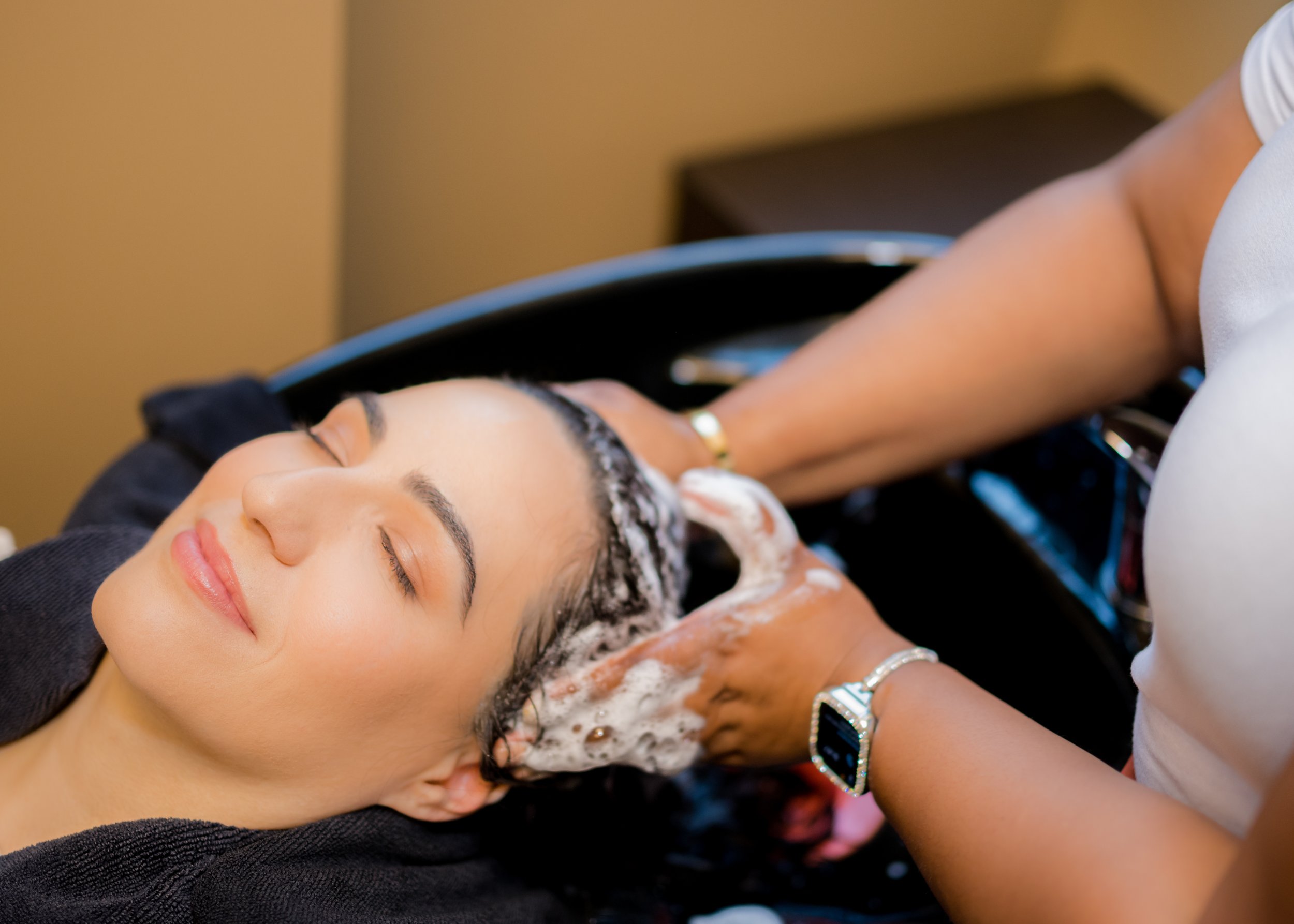
Myth #1: "You Don't Need to Shampoo Curly Hair"
This one shows up in a few different versions — shampoo is drying out your hair, shampooing less is better, curly hair doesn't need to be cleansed. None of it is true.
Cleansing is arguably one of the most important steps in curly hair care, and it should never be skipped. Your hair and scalp are exposed to the elements every day. You sweat. Your scalp produces natural oils. The products you use to style and protect your curls build up over time.
All of that needs to be removed, and shampoo is what removes it.
So how often should you actually be shampooing? It varies from person to person, but a solid general rule of thumb is:
Shampoo every 7–10 days
More often if you're active or sweat frequently
Less often if your scalp and lifestyle allow for it
Can shampoo be drying to your curls? Absolutely — if you're using the wrong one.
Shampoos exist on a spectrum, with varying degrees of cleansing power. Choosing the right formula for your hair actually leaves curls feeling clean and hydrated, not stripped.
The takeaway: it's not the shampooing that's hurting your curls. It's skipping it, or using the wrong one, that is.
Think of it this way: if buildup, sweat, and product residue never get properly removed, your curls are essentially trying to absorb moisture through a barrier. No amount of conditioner or styling product can outwork a dirty scalp. Cleansing is what clears the path for everything else to actually work.
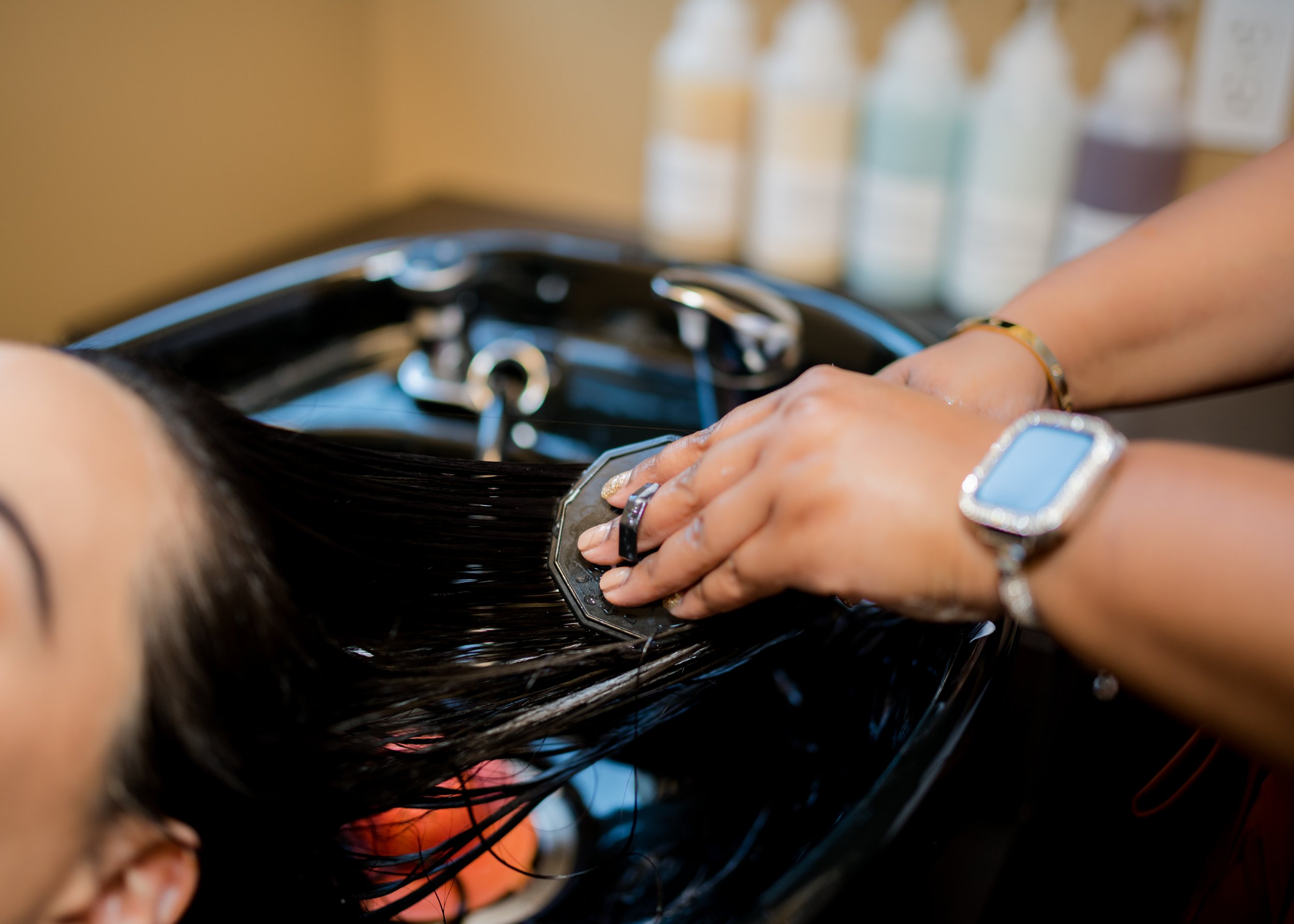
Myth #2: "Wide-Tooth Combs Are a Detangling Tool"
I want to gently push back on this one, because it might be the most common mistake I see walk through my door.
It's in the name — the teeth are wide. That means instead of actually working through a tangle, a wide-tooth comb usually just smooths right over it, leaving the knot intact underneath. And the tighter your curl pattern, the worse this problem gets.
If you've noticed your curls starting to mat or loc up over time, this is often exactly why. Tangles that never get fully removed just sit there, day after day, until your strands have no choice but to bond together.
Here's what actually works:
Use a detangling tool with teeth set closer together, designed to work through knots rather than glide past them
if you are prone to excessive tangling- start the process before you wet your curls
Work in small sections, starting at the ends and moving up, being gentle and patient
If you're currently reaching for a wide-tooth comb, I'd respectfully ask you to reconsider, and maybe retire it for good. It's not doing what you think it's doing.
Untreated tangles don't just risk matting; they disrupt your curl pattern's ability to clump and define the way it's meant to.
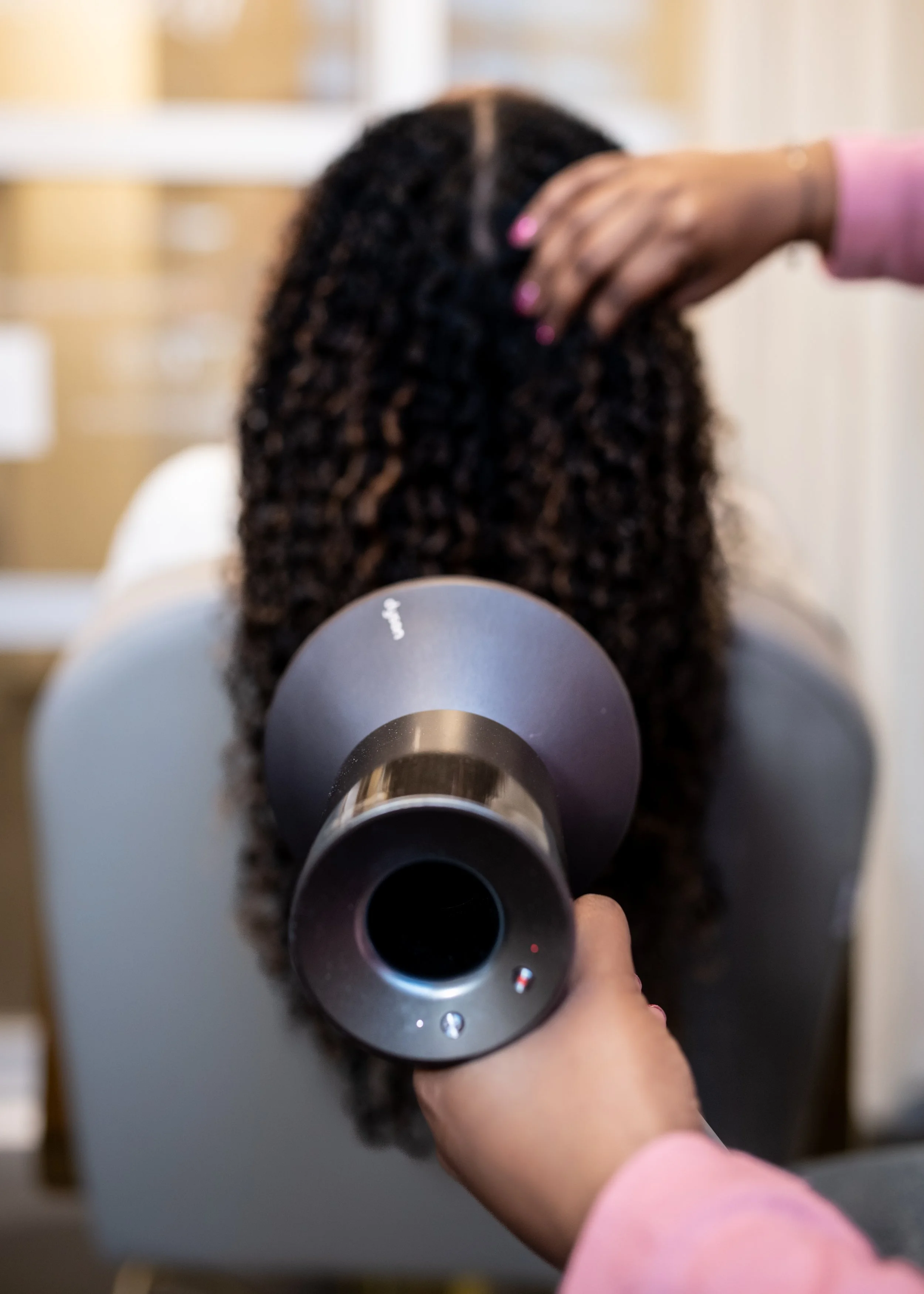
Myth #3: "I Don't Diffuse Because I Don't Want Heat Damage"
This misconception makes total sense on the surface. Blow dryers get hot, they're being used on your hair, so heat damage feels like the logical outcome. But the science behind it tells a different story.
Diffusing uses indirect heat. A flat iron or curling iron applies direct heat — that hot plate is physically touching your hair strand at around 375°F. A blow dryer, on the other hand, is heating the air to dry your hair, not pressing a hot surface directly onto your strands.
Unless you're holding the dryer on high heat in one exact spot for an extended period of time (which you wouldn't do — it would burn your scalp long before it damaged your curl pattern), the risk of heat damage from diffusing is very low.
The good news? You don't have to diffuse on cool anymore. You can use medium or even high heat to dry your curls faster and still protect their integrity.
In fact, skipping diffusing altogether often causes more frustration than it solves — air-drying alone is letting gravity dry your curls, leading to less volume and less definition. A proper diffuse session, done at a reasonable heat and distance, helps your curls dry in the shape they were styled in.

What This Means for Your Curls
None of these myths are your fault. They're everywhere: passed around in comment sections, curl group chats, and "hacks" videos that sound convincing but skip the actual hair science.
But here's the pattern worth noticing: in all three cases, the real issue isn't your curls. It's a routine built on information that was never quite right to begin with.
That's exactly the kind of thing we untangle (pun intended) together in the chair. Whether it's your cleansing routine, your detangling method, or how you're drying your curls, a few small corrections can completely change how your hair responds to your products, your styling, and your day-to-day routine.
Quick recap:
Shampoo every 7–10 days with a formula suited to your hair, not less often out of fear of dryness
Swap the wide-tooth comb for a closer-toothed detangler that actually works through knots
Diffuse with confidence — indirect heat is a very different risk than direct, high-heat tools
If reading this made you rethink even one part of your current routine, that's a great sign you're ready for a routine built specifically around how your curls actually behave.
Ready to stop guessing and start seeing real results? Book your appointment and let's build a curl routine that actually works for you.