Alyssa Monét Alyssa Monét

Curl Care Myths That Might Be Holding Your Curls Back(And What to Do Instead This Spring)

Think oil hydrates your curls or leave-in conditioner holds your style? These common curl care myths could be sabotaging your results. Learn what actually works and how to support healthier, more defined curls this spring.
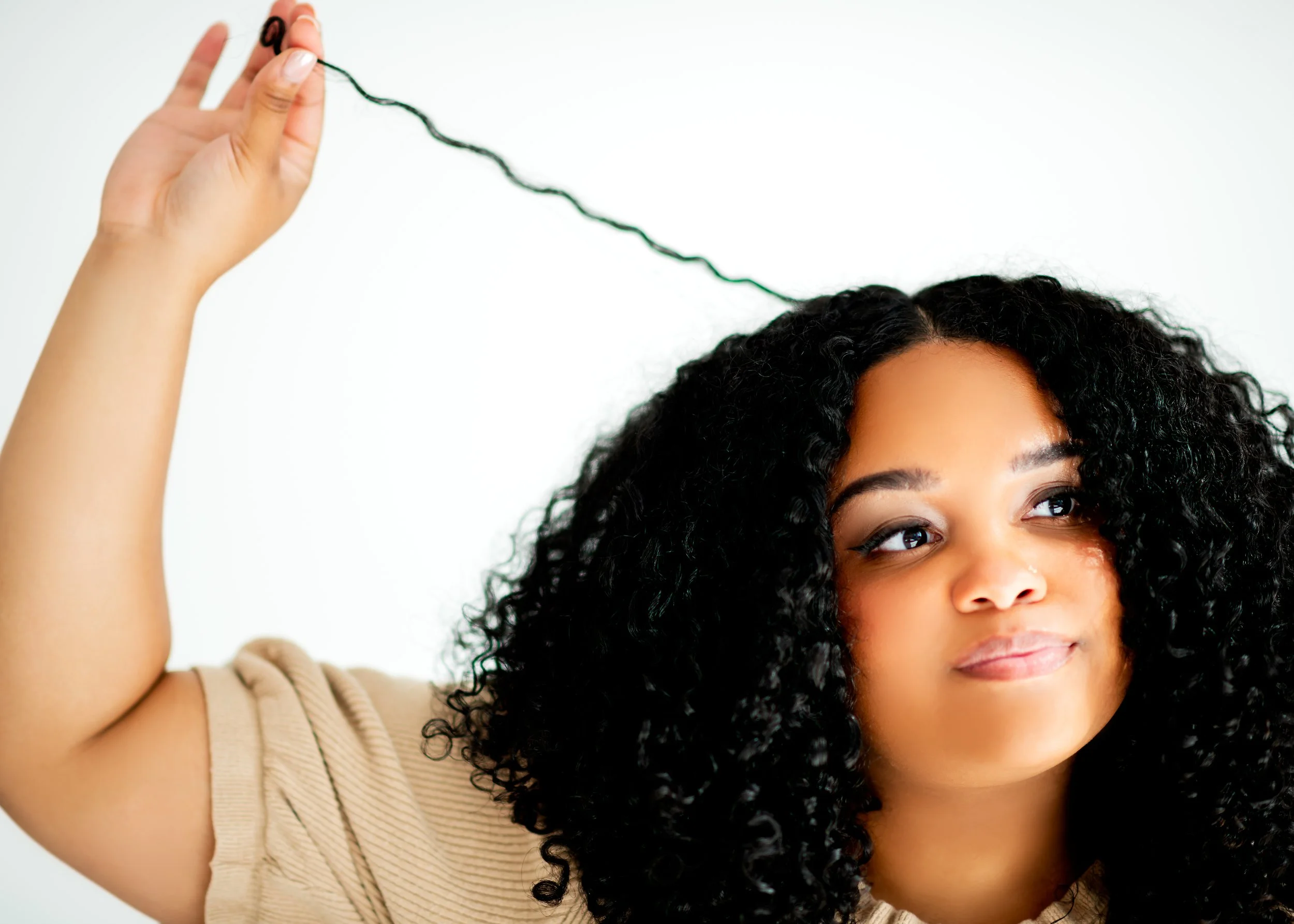
If your curls feel dry no matter what you use, don’t hold their shape, or seem to get worse instead of better over time, I get it.

March is the perfect time to reset old habits and clear up some of the most common curl care myths I see every single week behind the chair. These misunderstandings often lead to frizz, lack of definition, inconsistent curl patterns, and stalled progress, especially for curlies who are trying to repair or “rehab” their hair.

Let’s break down what’s actually happening and how to support your curls moving forward.

Myth #1: Leave-In Conditioner Is a Styling Product

Leave-in conditioner is not meant to hold your style.

It’s a prep product, not a finisher.

Think of leave-in as the step that:

  • adds extra moisture after cleansing

  • creates a more even, hydrated canvas

  • Prepares your curls to receive stylers

What it doesn’t do:

  • Provide hold

  • Lock in definition

  • Maintain your curl pattern throughout the day

If you’re only using leave-in and wondering why your curls fall flat, get frizzy, or don’t last, this is usually why.

What to do instead:

  • Use leave-in sprays- these are lighter weight, will give you the hydration you need without weighing down your curls

  • Follow with a styler (gel, cream, or mousse) that provides actual hold

Prep ≠ Style.

Your curls need both.

Myth #2: Oils Add Moisture to Your Hair

This one surprises a lot of people.

Oils do not hydrate your curls.

Water hydrates your curls.

Oils actually:

  • Create a barrier around the hair

  • Make hair more water-resistant

  • Prevent moisture from getting in if used incorrectly

When oil is layered before proper hydration, it can leave curls feeling:

  • Dry

  • Coated

  • Brittle over time

That’s why so many people say, “I use oil all the time, but my hair still feels dry.”

So when are oils helpful?

Oils are best used:

  • After diffusing

  • To gently break the cast

  • To add softness and shine after hydration is locked in

Used this way, oil is a finishing touch, not a hydration step.

Conditioner is what seals water into the hair.

Oil is optional and situational.

Myth #3: You Can Easily Flip Between Curly and Straight During Curl Rehab

If you’re actively working on repairing your curls, frequent straightening can slow or stall progress.

Heat stretching:

  • Alters your curl pattern

  • Reduces bounce and elasticity

  • Makes curls appear looser and less defined over time

What I see most often is this:

  • Clients start curl rehab

  • Continue straightening “sometimes”

  • Get frustrated that curls don’t bounce back

Eventually, there’s a choice point.

Most people end up preferring one style and more often than not, it’s straight, because curls don’t look or behave the way they used to.

If your goal is healthier, more consistent curls:

  • Reducing or eliminating heat helps tremendously

  • Your curls retain shape and spring faster

This doesn’t have to be forever, but consistency matters while healing.

Myth #4: Curly Cuts Are Bad for Your Hair

Curly cuts aren’t “bad”, they’re specific.

The real question isn’t “Is a curly cut good or bad?”

It’s “How do you actually wear your hair most of the time?”

A curly cut works best when:

  • You wear your hair curly the majority of the time

  • You only straighten once or twice a year

  • Your goal is shape, volume, and definition in your natural texture

A curly cut may not be the best fit if:

  • You frequently switch between curly and straight

  • Straight styles are your primary look

  • You want one cut to behave the same in multiple textures

Your haircut should match your lifestyle, not trends.

When your cut supports how you truly wear your hair, everything else becomes easier:

  • Styling

  • Curl longevity

  • Volume and balance

The Common Thread Behind These Myths

All of these beliefs have one thing in common:

They focus on products and techniques instead of intentional curl care.

Healthy curls thrive when:

  • Each product has a clear purpose

  • Hydration is prioritized correctly

  • Styling supports your goals

  • Your haircut aligns with real life

Curl care doesn’t need to be complicated, but it does need to be intentional.

Ready for a Curl Reset This Spring?

If your curls feel stuck, unpredictable, or like they’re not improving no matter what you try, it may be time to simplify and get support that’s tailored to your hair and lifestyle.

In the salon, we:

  • Identify what’s actually holding your curls back

  • Clarify your routine (no overwhelm)

  • Create a realistic plan for long-term curl health

You don’t need more products.

You need better foundations.

I'll see you in my chair when you're ready to truly love your curls.

Read More
Alyssa Monét Alyssa Monét

Mastering the Basics: The Real Foundation of Healthy, Hydrated, Defined Curls

Healthy, hydrated, defined curls don’t start with advanced techniques, they start with the basics. Learn why cleansing, conditioning, and foundational styling are essential steps you can’t skip, and how mastering them transforms your curls from the inside out.

If you’ve been wondering why your curls still feel dry, undefined, or inconsistent, even when you’re using all the “right” products, keep reading, this is for you.

Because the truth is:

Your curls can only be as healthy, defined, and long-lasting as the basics you’re building them on.

And most curl frustration doesn’t come from bad products…

It comes from skipping (or rushing) the essential foundation.

Before you worry about advanced techniques or trendy new routines, your curls need 3 things mastered first:

Cleansing. Conditioning. Styling.

These steps are non-negotiable and they make all the difference in whether your curls thrive or struggle.

There is no magic product that can replace them.

Let’s break each one down.

Cleansing: The First Step to Hydration

Shampooing your hair is not optional, it’s essential for curl health.

Healthy curls start with a clean scalp, because your scalp is skin, just like the rest of your body. If we cleanse our bodies regularly, our scalp deserves the same consistency.

A clean scalp creates the environment for your hair to actually accept water, which is the foundation of hydration. Without proper cleansing, no conditioner, leave-in, or curl cream will work the way you want it to.

How often should you cleanse?

At minimum: every 7–10 days

But if you:

  • Work out

  • Sweat often

  • Have a naturally oilier scalp

…you may find that your curls thrive when cleansing 2–3 times per week.

What counts as cleansing?

Only shampoo.

Co-washing, rinsing with water, or using conditioner alone won’t clean your scalp.

A great go-to shampoo should be:

  • Hydrating

  • Effective at lifting buildup

  • Gentle enough for regular use

This one step alone solves so many issues: dryness, flakiness, frizz, lack of definition, and curl inconsistency.

Conditioning: Where Hydration Actually Happens

A huge myth in the curly world is that oil seals moisture.

It does not.

Conditioner is what seals hydration into your curls.

Just like lotion helps your skin stay soft and moisturized, conditioner helps your curls retain water and stay flexible, shiny, and defined.

But the application matters.

To get the full benefits of conditioner, you must:

  • Apply it to very wet hair

  • Work it into your strands

  • Smooth it through like “ponytails” along the lengths

  • Take your time

Think of conditioner as lotion for your hair:

You wouldn’t slap lotion on your skin and walk away expecting results.

The same is true for conditioner, it needs to be worked in to hydrate deeply and evenly.

If your curls often feel dry, frizzy, or rough, this step is usually the place to look.

Styling: Where Personal Preference Meets Technique

Styling is the step where you get to choose what you want your hair to look like.

Ask yourself:

  • Are you a volume girly?

  • Is definition your style?

  • Or do you want both, depending on the day?

Your preferences will impact the technique you use, but the foundations stay the same.

No matter what style you love, your curls need:

  • A product that hydrates without weighing you down

  • Plenty of water during application

  • Technique that matches your goals

  • A willingness to adjust based on lifestyle

And water?

It is everything during styling.

Not enough water = immediate frizz, inconsistent pattern, and curls that won’t hold.

Here’s the part most curlies don’t hear enough:

You might love a certain styling look…

But if it isn’t realistic for your lifestyle, it’s okay to pivot.

Curls are flexible, forgiving, and meant to be adapted to real life. Perfection is not the goal, consistency is.

Your Curls Thrive When the Basics Are Strong

Mastering these three foundational steps makes every part of your curl routine easier. When your curls are properly cleansed, conditioned, and styled with intention, you’ll notice:

  • Less frizz

  • More definition

  • Longer-lasting wash days

  • Actual hydration

  • More predictable curls

  • A shape that actually looks great

  • Less frustration and more confidence

These basics aren’t glamorous, but they are transformational.

And once you master them?

Your dream curls become completely possible.

Ready to master the basics together? Click the link below to get started.

Read More